


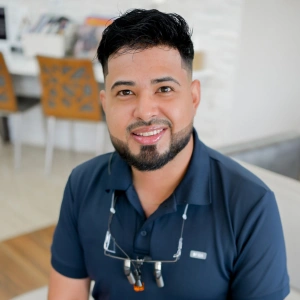


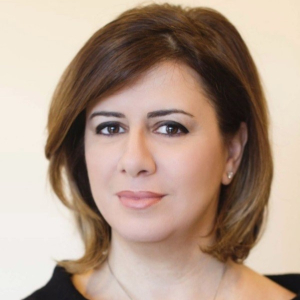




All the staff has been wonderful and helped me feel at ease. Dr. Sandy is spectacular! I have never been so comfortable with a dentist. I will definitely return, as well as bring my daughter and highly recommend. Thank you all so much.
Our modern Burr Ridge dental office opened its doors in December 2016 and is conveniently located in the Village Center, near popular destinations like Lifetime Fitness, Cooper’s Hawk Winery, and Starbucks. We invite you to visit our beautifully renovated space, featuring a comfortable, elegant waiting area and state-of-the-art operatories equipped with the latest technology in dentistry.
Your oral health matters to us, and our goal is to be your trusted partner every step of the way. From your first visit through every stage of life, we’re here to provide high-quality, compassionate care.
At 1st Family Dental, we make scheduling easy with evening and weekend appointments available. By offering a full range of services in-house, including general, restorative, cosmetic, orthodontic, and emergency care – we’re able to provide convenient, comprehensive treatment all under one roof. From routine cleanings to advanced treatments like implants, braces, and emergency care, we’re here to meet all your dental needs.
We understand that dental visits can bring anxiety for many patients, and we’re here to change that. Our skilled Burr Ridge dental team is dedicated to creating a welcoming, comfortable environment where you feel heard, supported, and at ease throughout your visit.
How CasinosNoKyc Explains Anonymous Gambling Trends Shaping Canadian Players
Canadian online gambling has undergone a quiet but measurable transformation over the past several years. What began as a niche preference among privacy-conscious players has evolved into a recognizable behavioral pattern that now influences how offshore platforms design their verification processes, deposit systems, and regulatory positioning. The shift toward anonymous or low-verification gambling is not simply a reaction to inconvenience — it reflects deeper tensions between provincial licensing frameworks, federal oversight ambiguity, and the practical realities of how Canadians interact with financial institutions when funding online accounts. Understanding this trend requires looking at both the structural conditions that created demand for anonymity and the information ecosystems that help players navigate an increasingly complex landscape.
The Regulatory Environment Driving Canadian Players Toward Anonymous Platforms
Canada’s gambling regulation is unusually fragmented compared to most developed nations. Under the Criminal Code of Canada, provinces hold the authority to conduct and manage gambling within their borders, but the federal government retains jurisdiction over criminal offenses related to unauthorized gambling operations. This division has created a gray zone that persisted for decades, during which millions of Canadians freely used offshore gambling sites without any clear legal consequence at the player level. The situation began shifting meaningfully in 2021 and 2022, when Ontario launched iGaming Ontario — a regulated market that went live in April 2022 and required licensed operators to implement full Know Your Customer (KYC) protocols aligned with the Financial Transactions and Reports Analysis Centre of Canada (FINTRAC) guidelines.
Ontario’s regulated framework brought with it mandatory identity verification at registration, source-of-funds checks for higher-volume players, and responsible gambling tools tied to verified accounts. While these measures serve legitimate consumer protection goals, they also introduced friction that a segment of players found unwelcome. Players accustomed to depositing with cryptocurrency or prepaid cards and receiving withdrawals without document submission found the new requirements jarring. Outside Ontario, provinces like British Columbia and Quebec operate their own Crown corporation platforms — PlayNow and Espace-jeux respectively — which similarly require verified accounts. The result is that any Canadian seeking a regulated domestic option faces some form of identity disclosure, regardless of province.
This environment directly incentivizes exploration of offshore alternatives. Offshore platforms licensed in jurisdictions such as Curaçao, Malta, or Kahnawake — a Mohawk territory in Quebec with its own gaming commission — operate outside provincial regulatory reach and are not obligated to enforce Ontario’s or any other province’s KYC standards. Some of these platforms have deliberately reduced their verification requirements to attract players who prioritize privacy. The trend is not unique to Canada, but Canadian players represent a disproportionately engaged segment of this offshore market, partly because of high household internet penetration, strong cryptocurrency adoption rates, and a gambling culture historically tolerant of offshore play.
What Anonymous Gambling Actually Means in Practice
The term “anonymous gambling” is frequently misused in popular discourse. In practice, very few platforms offer complete anonymity in the sense that no personal information is ever collected. What the market generally refers to are platforms operating under reduced KYC models — where identity verification is either not required at registration, only triggered above certain withdrawal thresholds, or entirely replaced by blockchain-based account systems where the wallet address serves as the identity layer. Understanding these distinctions matters because the risk profile, deposit options, and withdrawal mechanics differ substantially across these models.
The most common model among offshore platforms targeting Canadians is threshold-based KYC. A player can register with an email address, deposit using cryptocurrency or an e-wallet, and withdraw amounts below a defined limit — often somewhere between 2,000 and 5,000 Canadian dollars equivalent — without submitting identification. Above that threshold, the platform may request a government-issued ID or proof of address. This model allows platforms to claim compliance with their licensing jurisdiction’s anti-money laundering obligations while still offering a low-friction entry experience. For casual players who never approach those thresholds, the experience is functionally anonymous.
A smaller but growing segment of the market consists of crypto-native casinos where accounts are created via wallet connection rather than email registration. These platforms, often built on blockchain infrastructure, record wagers and payouts on-chain, making the transaction history transparent but pseudonymous. The player’s identity is never linked to their wallet unless they voluntarily disclose it or use an exchange that conducted KYC before they acquired the cryptocurrency. Resources like CasinosNoKyc.com aggregate and analyze these platforms specifically, providing Canadian players with structured comparisons of verification requirements, accepted cryptocurrencies, and withdrawal processing times — the kind of operational detail that determines whether a platform is genuinely usable for privacy-conscious players or merely markets itself as such.
Payment method selection is the most practical expression of a player’s anonymity preference. Bitcoin and Ethereum remain the most widely accepted cryptocurrencies at offshore casinos, but privacy-focused coins like Monero have gained traction among players specifically concerned about on-chain traceability. Prepaid Visa or Mastercard products, available at Canadian convenience stores and pharmacies without bank account linkage, represent the non-crypto alternative for players who want to avoid connecting gambling activity to their primary financial accounts. E-wallets like MiFinity or ecoPayz occupy a middle ground — they require some registration but act as a buffer between a player’s bank and the casino, reducing the visibility of gambling transactions on bank statements.
How Information Platforms Are Shaping Player Behavior and Platform Standards
One of the less-discussed dynamics in this space is the role that review and comparison platforms play in standardizing what “anonymous” means and holding operators accountable to their stated policies. When a casino advertises no-KYC withdrawals but then requests documentation from players attempting to withdraw modest sums, that discrepancy becomes visible through player forums, review aggregators, and specialized comparison sites. The feedback loop between player experience and published information has pushed platforms to be more precise in how they describe their verification policies — a development that benefits players who are making decisions based on those descriptions.
CasinosNoKyc.com has been particularly active in documenting the gap between marketing claims and operational reality for this segment of the Canadian market. By tracking withdrawal experiences and verification trigger points across dozens of platforms, such resources create a form of informal accountability that regulatory bodies in offshore jurisdictions rarely provide. This is significant because Curaçao’s gaming authority — which licenses a large share of the offshore platforms Canadians use — has historically been criticized for light-touch enforcement and slow response to player complaints. In the absence of robust regulatory oversight, information intermediaries fill part of the trust gap.
The influence of these platforms extends beyond individual player decisions. Operators aware that their verification practices are being monitored and published have incentives to align their actual policies with their stated ones. There is also competitive pressure: if a platform triggers KYC at a lower threshold than competitors while marketing itself as anonymous, players will migrate to alternatives and the comparison data will reflect that migration. This dynamic has contributed to a gradual standardization of what threshold-based KYC looks like in practice — not through regulatory mandate, but through market transparency.
Canadian players are also increasingly sophisticated about the distinction between licensing jurisdiction and actual player protections. A Curaçao license signals that a platform has met a minimum operational threshold but does not guarantee dispute resolution mechanisms comparable to those available under Ontario’s iGaming framework. Players who choose offshore platforms for privacy reasons are implicitly accepting reduced formal recourse in exchange for reduced disclosure requirements. Information platforms that explain this tradeoff clearly — rather than simply promoting offshore casinos — provide genuine value to players making informed risk assessments.
Cryptocurrency Adoption and Its Relationship to Anonymous Gambling Growth
Canada ranks consistently among the highest countries globally for cryptocurrency ownership relative to population. A 2023 survey by the Bank of Canada found that approximately 13 percent of Canadians owned cryptocurrency, a figure that had grown substantially from the 5 percent recorded in 2018. This adoption rate is directly relevant to anonymous gambling trends because cryptocurrency is the enabling technology for most low-KYC gambling models. Without accessible cryptocurrency on-ramps — exchanges, peer-to-peer platforms, Bitcoin ATMs — the practical reach of no-KYC gambling platforms would be far more limited.
Canada’s cryptocurrency infrastructure is relatively mature. Major exchanges including Coinbase, Kraken, and domestic platforms like Bitbuy and NDAX operate legally and are registered with FINTRAC as money services businesses. This means acquiring cryptocurrency through these platforms requires identity verification — creating an interesting paradox where the on-ramp to anonymous gambling is itself a KYC process. Players who use regulated exchanges to purchase Bitcoin and then transfer it to a no-KYC casino have disclosed their identity to the exchange, even if the casino never sees it. The anonymity in this model is relative rather than absolute: it prevents the casino from building a profile on the player, but it does not prevent the exchange from knowing that the player purchased cryptocurrency.
This limitation has driven interest in Bitcoin ATMs, which in Canada number in the thousands and are concentrated in urban areas. Depending on the ATM operator and the transaction amount, these machines may require minimal verification — sometimes only a phone number for SMS confirmation — for purchases below certain thresholds. Canadian regulatory guidance has tightened around Bitcoin ATM operators in recent years, with FINTRAC requiring registration and AML compliance, but enforcement has been uneven. For players who prioritize complete separation between their identity and their gambling activity, Bitcoin ATMs remain a practical option despite higher transaction fees compared to exchange purchases.
The growth of stablecoin usage at gambling platforms is another development worth noting. Tether (USDT) and USD Coin (USDC) have become increasingly common deposit and withdrawal currencies at offshore casinos because they eliminate the volatility risk associated with Bitcoin — a meaningful concern when a player’s balance can shift significantly between deposit and withdrawal. Several platforms targeting Canadian players now offer CAD-pegged or USD-pegged stablecoin accounts, allowing players to maintain a stable balance without converting back to fiat currency after each session. This development has made cryptocurrency gambling more accessible to players who were previously deterred by price volatility, expanding the addressable market for no-KYC platforms.
Decentralized finance protocols have introduced yet another layer to this ecosystem. Provably fair gambling — where the randomness of outcomes can be verified cryptographically by the player — has been a feature of crypto-native casinos for several years, but integration with DeFi liquidity pools and smart contract-based game logic represents a newer development. These platforms operate without a traditional corporate operator in the conventional sense; the game logic runs on a blockchain, and the house edge is encoded in the contract rather than administered by a company. For Canadian players, this model raises novel questions about recourse when something goes wrong, since there is no operator to contact and no licensing body with jurisdiction over a smart contract.
Canadian regulators have not yet developed comprehensive guidance specifically addressing decentralized gambling protocols, leaving players in genuinely uncharted territory. Provincial gaming authorities have focused their enforcement attention on convincing offshore operators to either obtain provincial licenses or exit the market — a strategy that has had limited success given the jurisdictional complexity. The emergence of smart contract gambling sits even further outside existing regulatory frameworks, and it is reasonable to expect that regulatory attention will eventually follow adoption, as it has with other cryptocurrency-adjacent financial activities.
The trajectory of anonymous gambling among Canadian players reflects a set of conditions unlikely to reverse quickly: a fragmented regulatory landscape that creates incentives to seek offshore alternatives, growing cryptocurrency literacy and infrastructure, and an information ecosystem that helps players navigate their options with increasing sophistication. Provincial regulators face the challenge of making their licensed markets competitive on user experience without abandoning the consumer protection rationale that justifies the regulatory apparatus in the first place. How that tension resolves over the next several years will determine whether the current offshore preference among privacy-conscious Canadian players represents a transitional phase or a durable market structure. For now, the players navigating these choices are doing so with more information and more options than any previous generation of Canadian gamblers — a development that carries both opportunity and risk in roughly equal measure.
Our Dental Services in Burr Ridge
Our Burr Ridge dentists offer a full range of general and specialty dental services, including:
- Dental Cleanings & Exams
- Dental Crowns and Bridges
- Dental Implants
- Dental X-Rays & Diagnostics
- Emergency Walk-In Appointments
- Extractions
- Family Dentistry
- Laser Surgery (Frenectomy & Gingivectomy)
- Laser Teeth Whitening
- Oral Surgery & Wisdom Tooth Extractions
- Orthodontic Treatment (Braces & Invisalign®)
- Pediatric Dentistry
- Root Canal Therapy
- Veneers & Lumineers®
OUR OFFICE HOURS
WHAT TIME WORKS FOR YOU?
| Sunday | Closed |
| Monday | 10:00 AM – 7:00 PM |
| Tuesday | 10:00 AM – 6:00 PM |
| Wednesday | 10:00 AM – 7:00 PM |
| Thursday | 10:00 AM – 7:00 PM |
| Friday | 8:00 AM – 4:00 PM |
| Saturday | 8:00 AM – 2:00 PM |
Friday: 8AM-4PM (1st & 3rd of the month)
Friday: 9AM-5PM (Every other)
Holiday hours may vary, please call for details
In addition to General, Cosmetic and Orthodontic services, our dental team includes an Oral surgeon, Endodontist, Pedodontist, Periodontist, Implanthologist and Prostodontist (All on 4)
WE ACCEPT
PPO Dental Insurance
Please call us to verify your insurance benefits.
FAQs
What insurance does 1st Family Dental of Burr Ridge accept?
Our Burr Ridge office accepts most PPO dental insurance plans, AllKids (Illinois Medicaid), and Adult Medicare Dental. Call (630) 323-9550 before your visit and our team will verify your specific plan and benefits so you know your costs upfront.
Is 1st Family Dental of Burr Ridge accepting new patients?
Yes, we’re accepting new patients of all ages at our Burr Ridge office. You can book online or call (630) 323-9550. New patients complete a short registration form, and we recommend arriving ten minutes early for a first visit.
Does 1st Family Dental of Burr Ridge treat children?
Yes. We see children from around age one through their teens at Burr Ridge, alongside adults and seniors — families can book appointments together rather than making separate trips. We accept AllKids for paediatric coverage.
Does 1st Family Dental of Burr Ridge offer emergency dental appointments?
Yes. Call (630) 323-9550 as early in the day as you can and we’ll do our best to see you the same day at Burr Ridge. For a knocked-out tooth, severe pain, swelling, or bleeding that won’t stop, phone us before coming in so we can prepare.
Does 1st Family Dental of Burr Ridge offer braces or Invisalign?
Orthodontic care is available through 1st Family Dental, and your Burr Ridge dentist can start the referral. Dedicated orthodontists practise at our Addison, Arlington Heights, Aurora, La Grange Park and Roselle offices. Consultations are free.
Do you have Spanish-speaking dentists and staff at 1st Family Dental of Burr Ridge?
Yes. Spanish-speaking staff are available at our Burr Ridge office, so you can go through your treatment, costs and paperwork in Spanish. Let us know when you call (630) 323-9550 and we will make sure a Spanish-speaking team member is available for your visit.
How do I book an appointment at 1st Family Dental of Burr Ridge?
Book online using the button on this page, or call our Burr Ridge office directly on (630) 323-9550, or email burrridgeoffice@1fd.org. Tell us the treatment you need and whether you have a preferred day, and we’ll find the earliest slot that works.
Our Family Dentists in Burr Ridge
Directions to Our Burr Ridge Dentist Office
- 1st Family Dental of Burr Ridge
Route
Limited Time Coupons & Special Offers
New Patient Special
Enter your information below and we’ll get right back to you.
Get $250 Off Braces!
Enter your information below and we’ll get right back to you.
What Patients are Saying About Us
Amazing facility great staff and an outstanding Doctor, Dr Aboud stayed late to help me with my agonizing pain, I couldn’t be any more happier with the treatment I received thank you so very much to amazing Dr and amazing staff!!!
Wally S.
Before I knew it, the assistant came out to tell me they were done and she did well. I was so relieved and happy. My daughter was happy and calm. I asked her about her visit. She now has no fears, and can’t wait for her next cleaning in 6 months.

Stef G.