




This was my first visit to 1st Family Dental of Chicago. The staff was friendly and the space is very clean. It was the most painless cleaning I have ever had in my life — just super easy. The doctor came in and gave great advice on teeth “to watch” and how to keep them clean. A great experience!
1st Family Dental of Chicago celebrated its grand opening in June of 2010. Our sleek, stylish and modern family dental clinic offers general and specialty dental services to the Loop and downtown Chicago area, as well as Old Town, Goose Island, Gold Coast, Lincoln Park, and Near North Side.
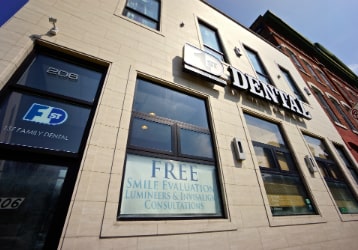
Our downtown Chicago dental office is located at 206 West Division Street, just west of the intersection with Wells Street and the historic Old Town district. We are a 5 minute walk west of the Clark and Division Red Line CTA station, and CTA Bus Routes # 37 and #70 serve the area with stops convenient to our office. Free parking is available in our private lot on the west side of our building, and metered parking is also available on Division Street.
1st Family Dental of Chicago is situated just east of the Seward Park. Many of our patients are students, family and educators of the many schools surrounding our office, including Walter Payton College Prep, the Moody Bible Institute, Franklin Fine Arts Center, and Jenner Elementary School.
1st Family Dental of Chicago is actively involved in the Old Town Residents and Merchants Association. Our Chicago family dentists, orthodontists, and staff participate annually in the Wells Street Art Festival, as well as the local health events, along with other local business partners. We are also pleased to work with local schools and area nonprofits and senior centers to provide education and outreach services for the community.
How 1DollarDepositCasinos Explains Low Deposit Gaming in New Zealand
New Zealand’s online gambling market has undergone significant structural changes over the past decade, and one of the most telling indicators of that shift is the growing prominence of low minimum deposit options. Where once a player needed to commit NZD 20 or more just to activate a casino account, the floor has dropped dramatically. Platforms now compete on accessibility as much as on game variety or bonus generosity, and the NZD 1 deposit threshold has become a genuine benchmark rather than a novelty. Understanding why this happened, how it works within New Zealand’s regulatory environment, and what it actually means for the player experience requires looking beyond the marketing surface and into the mechanics of the market itself.
The Regulatory Context Behind Low Deposit Gambling in New Zealand
New Zealand’s gambling legislation is built on the Gambling Act 2003, a framework that has remained largely intact in its foundational principles even as the digital landscape transformed around it. The Act distinguishes sharply between domestic operators and offshore ones. The New Zealand Racing Board and the state-owned Lotto New Zealand hold domestic licences, but the legislation does not explicitly prohibit New Zealand residents from accessing offshore-licensed casino platforms. This legal ambiguity — neither fully permissive nor strictly prohibitive — created the conditions under which a large grey market of internationally licensed operators could serve New Zealand players without facing direct domestic prosecution.
The practical consequence is that most online casinos accessible to New Zealand players hold licences from jurisdictions such as Malta (issued by the Malta Gaming Authority), Gibraltar, Curaçao, or the Isle of Man. These licences carry their own compliance requirements around responsible gambling, anti-money laundering procedures, and fair play standards, but they operate independently of New Zealand’s domestic law. This means the minimum deposit thresholds, bonus structures, and payment processing methods available to New Zealand players are largely determined by international competitive dynamics rather than by domestic regulatory mandates.
The absence of a New Zealand-specific minimum deposit requirement is important context. There is no regulation that says a casino must require NZD 20 or NZD 10 as a minimum. The thresholds are purely commercial decisions. When operators began experimenting with NZD 1 minimums around 2018 and 2019, they were responding to player demand signals and competitive pressure, not regulatory changes. The Gambling Commission’s focus during this period was primarily on problem gambling harm minimisation tools — self-exclusion registers, spending limits, and responsible gambling messaging — rather than on deposit floor amounts. This left the low-deposit space essentially open for operators willing to build the payment infrastructure to support it.
How NZD 1 Deposit Mechanics Actually Work
A NZD 1 deposit is not simply a marketing label. It requires specific payment processing infrastructure because most conventional banking channels and card processors impose minimum transaction floors that exceed NZD 1. Credit card processors, for instance, often have interchange fee structures that make sub-NZD 5 transactions economically unviable for merchants. This is why the rise of NZD 1 deposit casinos in New Zealand is closely tied to the adoption of specific e-wallet and prepaid voucher systems, particularly Paysafecard and, to a lesser extent, Neosurf.
Paysafecard operates on a prepaid voucher model where users purchase physical or digital vouchers in fixed denominations and redeem them at participating merchants. Because Paysafecard processes the transaction on its own network rather than through traditional card rails, it can accommodate lower minimums without the same interchange cost constraints. Several New Zealand-facing operators began integrating Paysafecard specifically to enable the NZD 1 deposit threshold, recognising that the e-wallet’s fee structure made it feasible. By 2020, Paysafecard had become the de facto payment method associated with low minimum deposit casinos in the New Zealand market.
The bonus mechanics attached to NZD 1 deposits deserve close examination. A common structure is a matched deposit bonus — for example, a 100% match up to NZD 100 — which, when applied to a NZD 1 deposit, yields a NZD 1 bonus. This is technically accurate but practically limited. More interesting are the platforms that offer a fixed bonus amount regardless of deposit size, such as a NZD 10 or NZD 20 welcome bonus triggered by any qualifying deposit, including NZD 1. In these cases, the low deposit is functioning as an access key rather than a proportional investment. Players essentially pay NZD 1 to unlock a bonus pool funded by the operator’s marketing budget.
Resources that catalogue these structures in detail, such as http://1-dollar-deposit-casinos.com/, serve a practical function for New Zealand players trying to map which operators offer fixed bonuses versus proportional ones on low deposits, since this distinction significantly affects the actual value a player can extract from a NZD 1 entry point.
Wagering requirements are the other critical variable. A NZD 10 fixed bonus with a 40x wagering requirement means a player must wager NZD 400 before withdrawing any winnings derived from that bonus. At NZD 1 stakes per spin on a slot game, that represents 400 individual spins, which is achievable in a single session but requires sustained play. The mathematics of expected value mean that most players will not complete wagering requirements profitably, which is precisely why operators can afford to offer them. The low deposit threshold reduces the financial barrier to entry while the wagering requirement ensures the operator’s expected return remains positive over a large enough player sample.
The Player Demographics Driving Low Deposit Demand in New Zealand
New Zealand has a relatively small population — approximately 5.1 million as of 2023 — but a high rate of internet penetration and mobile device usage, with Statistics New Zealand reporting household internet access rates above 90% in urban centres. The online gambling participation rate among New Zealand adults has been estimated at between 15% and 20% by various industry research bodies, though methodological differences make precise comparisons difficult. What is clear is that a meaningful segment of this player base is drawn to online casinos primarily for entertainment rather than as a serious investment of disposable income.
This entertainment-first orientation explains much of the demand for low minimum deposits. A player who budgets NZD 20 per month for online casino entertainment is not well served by a platform that requires NZD 20 as a single minimum deposit, because that commits their entire monthly budget in one transaction. A NZD 1 minimum allows the same player to spread engagement across multiple sessions, try different platforms, or simply test a game library before committing further funds. The low deposit is, in this sense, a sampling mechanism that aligns with how casual entertainment consumers already behave in other digital contexts — streaming service free trials, app store micro-purchases, and so on.
There is also a demographic dimension related to younger adults. New Zealanders aged 18 to 30 who are early in their careers, managing student debt, or living in high-cost urban housing markets like Auckland or Wellington have structurally lower discretionary spending capacity than older cohorts. For this group, a NZD 1 deposit casino is not a novelty but a genuine fit with their financial reality. Industry observers noted a measurable uptick in registrations from this demographic segment on low-deposit platforms between 2019 and 2022, coinciding with the period when these platforms became more widely available and better publicised through affiliate and review networks.
The responsible gambling implications of low deposit thresholds are a subject of ongoing debate within New Zealand’s public health and addiction research communities. The Problem Gambling Foundation of New Zealand has historically focused on the accessibility of gambling as a risk factor, and lower deposit floors do, by definition, reduce one financial barrier to entry. However, the counterargument — supported by some behavioural economics research — is that players with limited budgets who deposit NZD 1 are self-selecting into a low-stakes experience that may carry lower risk of significant financial harm than players who deposit NZD 200 in a single session. The evidence base is still developing, and the Gambling Commission has not issued specific guidance on minimum deposit thresholds as a harm reduction or harm amplification factor as of the time of writing.
How Information Resources Shape Player Decision-Making in This Segment
The low minimum deposit segment of the New Zealand online casino market is characterised by a high degree of information asymmetry. Players often cannot determine from a casino’s homepage whether a NZD 1 deposit will actually activate a bonus, which payment methods support the threshold, or whether the wagering requirements attached to any resulting bonus are competitive. This information gap is what specialist review and comparison resources have moved to fill, and it is a meaningful function rather than a purely promotional one.
1DollarDepositCasinos, as a resource specifically focused on this market segment, has contributed to standardising the vocabulary players use when evaluating these offers. Terms like “fixed welcome bonus,” “deposit-triggered free spins,” and “Paysafecard-compatible minimum” have become more widely understood among New Zealand players partly because resources dedicated to this niche have explained them consistently over time. This kind of category education matters because it reduces the likelihood that a player will misread a proportional bonus offer as a fixed one, make a NZD 1 deposit expecting NZD 100 in bonus funds, and then feel deceived by the outcome.
The affiliate and review ecosystem surrounding low deposit casinos in New Zealand is not without its conflicts of interest. Many comparison sites earn revenue through referral commissions, which creates an incentive to feature operators that pay higher commissions rather than those that offer objectively better terms. Players who understand this dynamic are better equipped to use these resources critically — cross-referencing bonus terms directly on operator sites, reading player forum discussions on platforms like Reddit’s r/onlinegambling community, and checking the licence verification pages of regulators like the Malta Gaming Authority before depositing.
The practical due diligence checklist for a New Zealand player evaluating a NZD 1 deposit casino should include: verifying the operator’s licence number against the issuing regulator’s public database; confirming that the payment method supporting the NZD 1 threshold is available for withdrawals as well as deposits (some platforms allow Paysafecard deposits but require bank transfer withdrawals, introducing friction); reading the full bonus terms and conditions to identify the wagering requirement, game contribution rates, and maximum bet restrictions during bonus play; and checking whether the platform has a New Zealand-specific responsible gambling page with links to local support services like the Problem Gambling Foundation’s helpline.
The maturation of the low deposit casino segment in New Zealand over the period from approximately 2017 to the present represents a broader shift in how online gambling platforms think about player acquisition. The traditional model — attract high-value depositors with large welcome bonuses — has been supplemented by a volume model in which operators compete for a larger number of lower-stakes players. Whether this is better or worse for players as a population depends substantially on the specific terms offered and the individual player’s relationship with gambling as an activity. What is certain is that the infrastructure now exists, the player demand is real, and the information resources to navigate this segment have become considerably more sophisticated than they were even five years ago.
New Zealand’s low minimum deposit casino landscape is, ultimately, a product of the intersection between flexible international licensing, innovative payment processing technology, and a player base that has become increasingly sophisticated in its expectations. The NZD 1 deposit is neither a gimmick nor a guaranteed path to value — it is a structural feature of a competitive market that rewards players who take the time to understand what they are actually being offered. As payment technology continues to evolve, with real-time bank transfers and cryptocurrency options expanding the range of methods that can support low minimums, the floor is unlikely to rise. If anything, the competitive logic of the market suggests that the accessibility of online casino gaming in New Zealand will continue to increase, making the kind of detailed, mechanics-focused analysis that distinguishes genuine information resources from promotional content more valuable than ever for players trying to make informed decisions.
Our Dental Services in Chicago
Our Chicago dentists offer a full range of general and specialty dental services, including:
- Dental Cleanings and Checkups
- Emergency Walk-In appointments
- Dental X-Rays and Diagnostics
- Dental Implants
- Dentures, partials and bridges
- Veneers and Lumineers ®
- Laser Teeth Whitening
- Oral Surgery and Wisdom Tooth Extractions
- Laser surgery procedures including Frenectomy and Gingivectomy
- Pediatric Dentistry
Chicago Family Dentist in Old Town
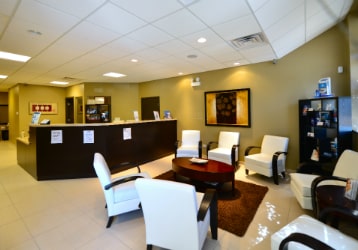
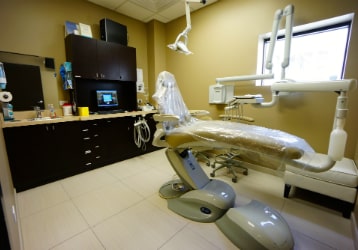
1st Family Dental of Chicago is modern, spacious, fully digital, and features current technologies and equipment for diagnostics and speciality treatments. Our dental surgery rooms also feature Nitrous Oxide service, massage chairs and offer privacy and comfort during treatment. All of our patients can enjoy music or watch their favorite show on flat-screen TVs located in each room.
Chicago Family Dental Services
At our Chicago dental office, we make it easier to prioritize your smile with convenient evening hours. Our Chicago dentists and team are committed to ongoing education, using advanced techniques and the latest technology to deliver exceptional care.
View our Little Village dental office in Chicago, IL

OUR OFFICE HOURS
WHAT TIME WORKS FOR YOU?
| Sunday | Closed |
| Monday | 8:00 AM – 4:30 PM |
| Tuesday | 11:00 AM – 7:30 PM |
| Wednesday | 10:00 AM – 6:30 PM |
| Thursday | 8:00 AM – 4:00 PM |
| Friday | 8:00 AM – 4:30 PM |
| Saturday | Closed |
Holiday hours may vary, please call for details
In addition to General and Cosmetic services, our dental team also includes an Oral Surgeon, Periodontist, and Prosthodontist (All on 4).
WE ACCEPT
PPO Dental Insurance
Please call us to maximize your insurance benefits.
Inside Our Chicago Dental Office - Google Virtual Tour
FAQs
What insurance does 1st Family Dental of Chicago — Old Town accept?
Yes, we’re accepting new patients of all ages at our Old Town office. You can book online or call (312) 266-6400. New patients complete a short registration form, and we recommend arriving ten minutes early for a first visit.
Does 1st Family Dental of Chicago Town treat children?
Yes. We see children from around age one through their teens at Old Town, alongside adults and seniors — families can book appointments together rather than making separate trips. We accept AllKids for paediatric coverage.
Does 1st Family Dental of Chicago Town offer emergency dental appointments?
Yes. Call (312) 266-6400 as early in the day as you can and we’ll do our best to see you the same day at Old Town. For a knocked-out tooth, severe pain, swelling, or bleeding that won’t stop, phone us before coming in so we can prepare.
Does 1st Family Dental of Chicago Town offer braces or Invisalign
Orthodontic care is available through 1st Family Dental, and your Old Town dentist can start the referral. Dedicated orthodontists practise at our Addison, Arlington Heights, Aurora, La Grange Park and Roselle offices. Consultations are free.
Do you have Spanish-speaking dentists and staff at 1st Family Dental of Chicago — Old Town?
Yes. Spanish-speaking staff are available at our Old Town office, so you can go through your treatment, costs and paperwork in Spanish. Let us know when you call (312) 266-6400 and we will make sure a Spanish-speaking team member is available for your visit.
How do I book an appointment at 1st Family Dental of Chicago — Old Town?
Book online using the button on this page, or call our Old Town office directly on (312) 266-6400, or email division@1fd.org. Tell us the treatment you need and whether you have a preferred day, and we’ll find the earliest slot that works.
Our Chicago Family Dentists in Dental of Chicago
Directions to Our Dental of Chicago Dentist Office
- 1st Family Dental of Chicago
Route
What Patients are Saying About Us
Always a friendly greeting at 1st Family Dental of Chicago. Wonderful dental hygienists and dentists alike. Never any insurance issues. Pleasant, efficient, competent. Very grateful to have this team in my backyard!
Meredith B.
I made an emergency appoint and the entire staff was kind, fast and very efficient. And made sure I was happy. I will definitely go to 1st Family Dental of Chicago for regular checkups and appointments.
Caleb T.
Everything was perfect. A very kind and helpful staff, and they are friendly and on time. I have been a customer for 19 Years and I haven’t been once disappointed. Thank you 1st Family Dental of Chicago for providing excellent service! I am delighted to have great specialists and wonderful service.
Sanja M.
Dr. Basko is excellent. She is very professional and caring. She provided excellent advice which allowed me to avoid some major surgery. The staff is always cheerful and caring as well.
David J.
Great experience! Everyone there was super friendly and the facility is clean and very nice. Silvia, the hygienist, was amazing! Will definitely return!
Natalie M.