

Amazing service provided with highly professional people. All doctors and nurses were very helpful in explaining everything and were very skilled. HIGHLY RECOMMEND!
The best way to keep your smile in great shape!
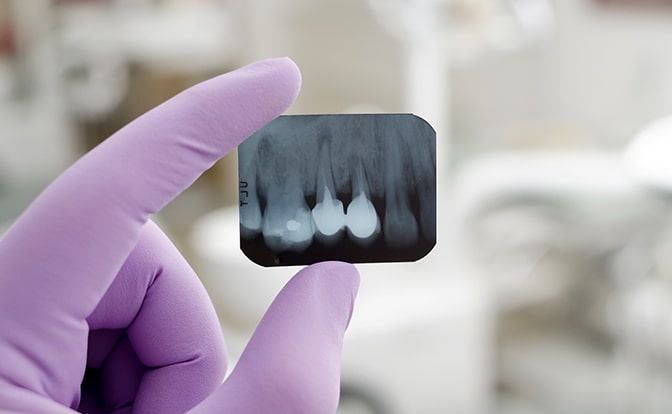 Regular oral exams and dental X-Rays are the best way to keep your smile in great shape and avoid dental emergencies and other issues that can become more costly.
Your dentist or dental hygienist will review your digital dental X-rays and perform an exam to check the health of your teeth and gums, as well as examining any dental restorations such as fillings or crowns to make sure they are in good shape.
Your dentist can spot the signs of problems such as cavities or gum disease and help you proactively take care of them. Your regular dental checkup is a great time to ask your dental professional about any questions you may have about your oral health, and review tips and techniques for good brushing and flossing habits to keep your smile as healthy as possible between visits.
An oral exam, commonly referred to as a dental checkup, is the process used by dentists to carefully review your oral health. Oral exams typically involve the entire mouth, as a component of a first-time visit or a regular 6-month check-up. Oral exams can also be used to identify a specific issue in one particular area of the mouth, such as pain, swelling, broken teeth, or other dental problems.
What are the steps of an Oral Exam?
There are four main categories of oral exams:
- Comprehensive Oral Evaluation: A comprehensive oral exam is needed for patients who are seeing a new dentist for a checkup for the first time, or if it has been some time since the last visit.
- Regular (Periodic) Oral Evaluation: Regular exams are a part of the 6-month dental check-up process. A periodic oral exam is a complete update of already existing information for established patients who regularly visit the office. A periodic exam may or may not include X-rays, depending on when they were last taken, if the dentist observes an issue that may require an x-ray, or if the patient comes in for a checkup with pain or other symptoms.
During periodic or comprehensive oral evaluations, your dentist will review your radiographs (X-rays), conduct a visual exam, and look for inflammation, bleeding, periodontal pockets, and calculus (build-up) around and under the gum line. He or she will check the outside and inside of your mouth, tongue, and other soft tissue, and will let you know if they see anything that may be a potential warning sign of oral cancer or other condition. In some cases, your dentist may refer you to your physician for certain issues.
Your dentist may use an explorer to check your teeth and gums, including any existing work you may have such as fillings, bridges, and crowns. If you have a full or partial denture, your dentist will ask you to remove them for the examination. At your checkup your dentist will ask if anything is bothering you. This is an excellent time to tell your dentist if you’ve noticed any symptoms or have any questions or concerns about your oral health or your smile in general.
- Limited Oral Evaluation: this type of exam is also known as “problem focused.” It is used to identify and diagnose symptoms such as dental pain, or swelling in a particular area of the mouth. Limited exams may involve digital X-rays of the affected area and diagnostic reading by the dentist, as well as a visual evaluation. Your dentist will ask questions relating to your symptoms.
- Follow-Up Evaluation: Your dentist may ask you to come back for a follow-up visit to check on the healing and progress for certain types of treatment provided, or if you are experiencing any pain or other symptoms beyond what is normally expected.
Pediatric Oral Exams for Children
At 1st Family Dental, we recommend that parents bring their children for oral exams beginning at 12 months, and every 6 months after that. Bringing your child early and regularly is an important way to establish your child’s confidence and comfort during regular dental visits, and create a positive relationship with the dentist and staff. To learn more about pediatric oral exams and dental check-up visits for kids, click here.
Dental X-rays are a critical part of the diagnostic process for oral health. There are several types of X-rays that may be required for your visit. Here are the main categories of X-rays:
- Full Mouth Series: Also known as a “full set” of X-rays, a full mouth series is typically associated with a comprehensive oral exam. This series of X-rays captures the entire mouth and is used to establish an original or baseline oral health and history. A full mouth set of X-rays is a combination of “bitewing” and “periapical,” or “PA” X-rays.
- Bitewing X-Rays: These X-rays show the upper and lower back teeth in a single view. This allows the dentist to see how they touch each other and line up. This type of x-ray also allows your dentist to see any decay, bone loss, gum disease, or possible infection.
- Periapical X-Rays: show the entire tooth, from the exposed crown to the end of the root and the bones that support the tooth. These X-rays are used to find dental problems below the gum line or in the jaw, such as impacted teeth, abscesses, cysts, tumors, and bone changes linked to some diseases.
- checkup (Periodic) X-Rays: Also referred to as “recall” X-rays, these are a combination of bitewing and periapical X-rays. These X-rays are typically updated as needed when combined with regular check-up visits.
- Limited or problem-focused X-rays: These are usually a combination of bitewing and periapical X-rays that are focused on a specific area to help diagnose a specific issue, or taken during a procedure if needed.
- Panoramic X-Ray: Also referred to as a “pano” or “panoramic,” this type of x-ray is typically used for specific types of treatment or diagnostics. A panoramic x-ray shows the entire mouth including jaws, teeth, sinuses, nasal area, and temporomandibular (TMJ) joint, in one image. Panoramic X-rays are often associated with diagnosing wisdom tooth issues, orthodontic consultations, implant and oral surgery consultations, or may be recommended by the dentist if there is an issue preventing a standard bitewing or periapical x-ray.
Our x-ray equipment is fully digital at all 1st Family Dental locations, which means that any radiation associated with these images is lower than with conventional (film) X-rays. Humans are exposed to radiation of varying types and degrees during their lifetime – from airport and security screens, to sunshine, to home appliances. Dental X-rays, when combined with our protective measures such as lead shielding, involve an extremely minimal exposure to radiation. We also follow best practice standards and only take dental X-rays when they are needed. If you are concerned about dental X-rays, we encourage you to speak with your dentist for more information.
Women who are pregnant should continue their regular 6-month check-up routine. Dental check-ups, diagnostic X-rays, and most forms of dental treatment do not pose risks for normal pregnancies. In fact, hormone changes during pregnancy may make some women more susceptible to developing gum disease or other dental issues. Regular check-ups and diagnostics can help detect and address these issues. Periodontal disease is associated with low birth weight and pre-term deliveries. If you are pregnant, it is important to let your dentist or hygienist know at the beginning of the visit, and discuss any potential questions or concerns. Women who are pregnant should also be under the care of a midwife or obstetrician.
The cost of oral exams and X-rays vary and depend on multiple factors including frequency and type of x-ray needed. Your dentist will review with you what type and frequency of X-rays and exams are needed to maintain your optimal oral health.
If you have dental insurance, your coverage often includes preventative care including regular exams and X-rays. It is important to stay up to date with your insurance coverage. Our staff are happy to review your coverage with you to ensure you are maximizing your insurance benefits while minimizing any out of pocket expenses.
Where can I get an Oral Exam or Dental X-Rays?
1st Family Dental offers full diagnostic services, including standard and panoramic X-rays, at all 1st Family Dental locations. We also welcome walk-in or call-ahead emergency appointments during regular business hours.
Can I bring X-rays from another dental or specialty practice?
Yes. It is possible to transfer records from one dental practice to another. You may be asked to provide permission to transfer your records, or you can bring them with you. It is important to note that X-rays are a critical component of proper diagnostics, and even with electronic transfer of digital X-rays, there may be some loss of image quality. Your dentist will review the records and let you know if additional X-rays may be needed for diagnostic purposes.
Can I refuse to have dental X-rays?
Yes. As a patient, you are fully in control over your oral health. However, if you are concerned about the necessity or safety of any dental X-rays that are recommended, we strongly suggest reviewing your concerns with your dentist. X-rays are a critical component of the diagnostic process and oral evaluation. In some cases, your dentist may not be able to proceed without X-rays, and will discuss this with you to review next steps.
Simple Steps to Getting Started

STEP ONE
Find A Location

STEP TWO
Book An Appointment
What Patients are Saying About Us
I have just completed a 16 months orthodontic procedure. Very happy how much of a difference it is! I can smile with confidence! A truly high professional dental and orthodontic services by First Family Dental! Thanks to Dr. Abboud, Dr. Williams and all the staff at First Family Dental and Midwest Orthodontics that showed a genuine patient care…
Sam K.
This has been my go to dentist location since I can remember. I recently took my mom again after her crown fell off and I just can’t rave enough about this location and the dentist that helped us out! If you want the old school family vibe-this is the place to go to. No rip offs if anything they work with you and make you feel comfortable.
Emma M.
My appointment today was outstanding, from being greeted by name by the receptionist upon my arrival, through the cleaning process by Debbie and the dental exam. The equipment is all top shelf and the treatment rooms are very clean and comfortable. I would highly recommend 1st Family Dental in the Burr Ridge Village Center to anyone looking for an exceptional dental experience.
Tony T.
I prepared myself for a life without teeth, and did not think there was anything that could be done to help me. I expected to learn to live out the rest of my years hiding my smile, and living with my digestive problems – until I found 1st Family Dental.

Joe F.
Before I knew it, the assistant came out to tell me they were done and she did well. I was so relieved and happy. My daughter was happy and calm. I asked her about her visit. She now has no fears, and can’t wait for her next cleaning in 6 months.

Stef G.
When I got home and looked at my teeth in the mirror, I was astounded with the job that Dr. Akhikar had done. The new filings were much less noticeable than my previous one. I couldn’t have been more satisfied.
Henry B.
The staff was friendly and one of the assistants even let me hold her hand while the extractions were taking place! The dentist who treated me was very professional and made me feel very comfortable.
Kako deluje ocenjevanje v smučarskih skokih po mnenju Stavnicivodnik
Smučarski skoki sodijo med najbolj tehnično zahtevne zimske športe, kjer razlika med zmagovalcem in tistim, ki pristane zunaj stopničk, pogosto znaša le delček točke. Za gledalce, ki šport spremljajo le občasno, se sistem točkovanja morda zdi nepregleden, a v resnici temelji na natančno določenih pravilih, ki jih vzdržuje Mednarodna smučarska zveza (FIS). Razumevanje tega sistema ne le poglobi uživanje ob gledanju tekem, temveč odpre tudi povsem novo perspektivo za tiste, ki se ukvarjajo z napovedovanjem rezultatov ali stavami na smučarske skoke. Sistem se je skozi desetletja razvijal in danes združuje objektivne meritve razdalje z estetsko presojo sodnikov, kar ustvarja zanimivo kombinacijo natančnosti in subjektivnosti.
Osnove točkovanja: razdalja in slog
Vsak skok se ocenjuje po dveh ključnih sklopih meril: točke za razdaljo in točke za slog. Točke za razdaljo so matematično določene in temeljijo na primerjavi dosežene razdalje s tako imenovano točko K oziroma kritično točko skakalnice. Vsaka skakalnica ima določeno vrednost K-točke, ki je referenčna vrednost za izračun točk. Na skakalnicah z oznako HS (Hill Size) in K-točko nad 100 metrov velja, da skakalec za vsak meter nad K-točko prejme 1,8 točke, za vsak meter pod K-točko pa se mu 1,8 točke odšteje. Na manjših skakalnicah, kjer je K-točka med 75 in 99 metri, je ta vrednost 2,0 točki na meter. Referenčna vrednost točk za doseženo K-točko je na večini tekem 60 točk.
Točke za slog ocenjuje pet sodnikov, ki so nameščeni ob doskočišču. Vsak sodnik lahko dodeli od 0 do 20 točk, pri čemer se skrajni oceni – najvišja in najnižja – izvzameta, preostale tri pa seštejejo. Največje možno število točk za slog je torej 60. Sodniki ocenjujejo let skozi zrak, položaj telesa, koordinacijo rok in nog ter doskok, ki mora biti izveden v tako imenovanem telemark položaju – ena noga je pomaknjena naprej, kolena so pokrčena. Doskok brez telemark položaja, imenovan stoja, se kaznuje z odbitkom, ki se giblje med 2 in 7 točkami glede na resnost napake.
Skupna ocena skoka je vsota točk za razdaljo in točk za slog. Na tekmah za Svetovni pokal skakalec opravi dva skoka, skupni rezultat pa je seštevek obeh. V finalu nastopi 30 skakalcev, ki so se uvrstili skozi kvalifikacije ali pa so bili direktno razvrščeni glede na uvrstitev na lestvici Svetovnega pokala. Skakalci, ki v finalu ne nastopijo, ne prejmejo točk za Svetovni pokal na tistem tekmovanju.
Kompenzacija vetra in zaletišča: pravičnost v spremenljivih razmerah
Eden najpomembnejših, a hkrati najmanj razumljenih vidikov sodobnega točkovanja v smučarskih skokih je sistem kompenzacij za veter in položaj zaletišča. FIS je ta sistem postopoma uvedel v začetku 21. stoletja in ga dokončno standardiziral v sezoni 2009/2010. Namen je bil zagotoviti večjo pravičnost, saj naravne razmere – smer in moč vetra ter višina zaletišča – bistveno vplivajo na doseženo razdaljo in so povsem zunaj nadzora skakalca.
Vsaka skakalnica ima določen koeficient vetra, ki pove, koliko točk se prišteje ali odšteje za vsako enoto vetra, izmerjeno s posebnimi anemometri vzdolž skakalnice. Tipičen koeficient vetra za velike skakalnice znaša med 9 in 12 točk na meter na sekundo. Če skakalec skače pri vetru v hrbet, ki mu pomaga, se mu točke odštejejo; če skače pri vetru v glavo, ki mu škodi, se mu točke prištejejo. Merjenje poteka v realnem času med skokom, kar zagotavlja natančnost kompenzacije.
Podobno velja za položaj zaletišča. Sodnik za zaletišče med tekmo prilagaja višino izhodišča glede na razmere. Vsak pomik zaletišča za eno stopnjo navzgor ali navzdol prinese določeno število kompenzacijskih točk, ki se prav tako prištejejo ali odštejejo od skupnega rezultata. Koeficient zaletišča je specifičen za vsako skakalnico in ga FIS potrdi pred začetkom sezone. Ta sistem je bil uveden prav zato, ker je organizator tekem pogosto prisiljen znižati zaletišče iz varnostnih razlogov – ko so razmere ugodne in bi skakalci pristajali predaleč – ali ga zvišati, ko so razmere slabe.
Analitiki in navdušenci nad stavami na smučarske skoke so ugotovili, da razumevanje tega sistema kompenzacij bistveno izboljša kakovost napovedi. Na portalu stavnicivodnik.com so na primer razložili, kako upoštevanje vremenskih napovedi in poznavanja specifičnih koeficientov posameznih skakalnic pomaga pri ocenjevanju verjetnih rezultatov, kar je dragocena informacija za vsakogar, ki želi poglobljeno razumeti dinamiko tega športa.
Ekipne tekme in posebni formati: drugačna pravila igre
Poleg individualnih tekem Svetovni pokal in velika tekmovanja, kot sta Svetovno prvenstvo in olimpijske igre, vključujejo tudi ekipne tekme. V ekipni konkurenci nastopijo štiri države, vsaka z ekipo štirih skakalcev. Vsak skakalec opravi dva skoka, skupni rezultat ekipe pa je seštevek vseh osmih skokov. Pravila za točkovanje so enaka kot pri individualnih tekmah, vključno s kompenzacijami za veter in zaletišče.
Posebnost ekipnih tekem je tudi sistem izpadanja v finalu, ki je bil uveden v sezoni 2017/2018. Po prvem krogu izpade ekipa z najslabšim rezultatom, v finalnem krogu pa tekmujejo preostale tri ekipe. To dramatično poveča napetost tekmovanja in pogosto privede do nepričakovanih preobratov. Ekipe morajo skrbno načrtovati vrstni red nastopov, saj je taktično postavljanje skakalcev – kdo nastopi prvi in kdo zadnji – del strategije, ki jo trenerji premišljeno pripravljajo.
V zadnjih letih se je uveljavil tudi format mešanih ekip, kjer vsaka ekipa vključuje dva moška in dve ženski skakalki. Ta format je bil prvič vključen v olimpijski program na igrah v Pekingu leta 2022. Točkovanje je enako kot pri standardnih ekipnih tekmah, a koeficienti za kompenzacijo vetra in zaletišča so prilagojeni glede na skakalnico oziroma njene specifične parametre za moške in ženske. Ker ženske in moški pogosto skačejo z različnih zaletišč, je koordinacija sodnikov in tehničnih delegatov FIS izjemno zahtevna.
Zanimiv format je tudi Raw Air turnir, ki se vsako leto odvija na Norveškem in vključuje sedem tekem v desetih dneh na štirih različnih prizoriščih – Oslu, Lillehammerju, Trondheimju in Vikersundu. Skupni zmagovalec se določi na podlagi seštevka vseh skokov, vključno s kvalifikacijami, ki so pri standardnih tekmah Svetovnega pokala ločene in ne prispevajo k uradnim točkam. Raw Air je posebnost prav zato, ker vsak skok šteje, kar ustvarja drugačno dinamiko in od skakalcev zahteva izjemno konstantnost skozi celoten turnir.
Sodniki in njihova vloga: subjektivnost v objektivnem sistemu
Kljub vsem matematičnim formulam in tehničnim kompenzacijam ostaja ocenjevanje sloga v smučarskih skokih subjektivni element, ki v določenih primerih odloča o zmagovalcu. Pet sodnikov, ki ocenjujejo vsak skok, mora biti licencirani s strani FIS in redno opravlja usposabljanja, da zagotavlja usklajenost meril. Sodniki so praviloma iz različnih držav, da se zmanjša možnost pristranskosti v korist domačih skakalcev.
Ocenjevanje sloga je razdeljeno na štiri ključne elemente: let, doskok, izhod iz doskoka in splošni vtis. Let ocenjuje položaj telesa v zraku – idealen je tako imenovan V-slog, ki ga je populariziral Janez Gorišek in ki ga je prvi sistematično začel uporabljati Jan Boklöv konec osemdesetih let prejšnjega stoletja. Pred tem je prevladoval paralelni slog, kjer so skakalci držali smučke vzporedno. Prehod na V-slog je revolucioniral šport, saj je omogočil bistveno večje razdalje ob enakih pogojih zaletišča.
Doskok v telemark položaju je eden najpomembnejših elementov ocene sloga. Idealen telemark zahteva, da skakalec pristane z eno nogo pred drugo, pri čemer sta koleni pokrčeni in roke razprostrte za ravnotežje. Vsaka napaka pri doskoku – padec, stoja brez telemark položaja, dotik tal z rokami – se kaznuje z odbitkom točk. Padec po doskoku, ki je bil sicer izveden pravilno, se kaznuje manj kot padec med letom ali ob doskoku. Pravila FIS natančno določajo lestvico kazni za posamezne napake, kar sodnikom daje jasne smernice, a hkrati ohranja prostor za presojo.
Sodniki so v preteklosti večkrat postali predmet razprave, zlasti na velikih tekmovanjih, kjer so bile razlike v ocenah med posameznimi sodniki opazno velike. FIS je v odziv na to uvedel sistem nadzora, ki po tekmovanjih analizira ocene in ugotavlja morebitne sistematične pristranskosti. Sodniki, pri katerih se ugotovi vzorec pristranskosti, so lahko začasno suspendirani ali razporejeni na manj pomembna tekmovanja. Kljub temu ostaja subjektivnost neizogiben del sistema, ki ga mnogi štejejo za del čara tega športa.
Razumevanje celotnega sistema točkovanja v smučarskih skokih – od matematičnih osnov razdalje in stila do zapletenih kompenzacij za veter in zaletišče ter subtilnosti sodniških ocen – bistveno obogati doživetje tega športa, ne glede na to, ali ga gledate kot navdušenec ali ga analizirate z bolj analitičnega vidika. Sistem, ki se je razvijal več desetletij in ki ga FIS nenehno izpopolnjuje, danes zagotavlja eno najpravičnejših in najbolj transparentnih tekmovalnih okolij v zimskih športih, hkrati pa ohranja tisto mero nepredvidljivosti, ki smučarske skoke uvršča med najbolj gledan zimski šport na svetu.
Cynthia E.
This dental office has provided me the best care and treatment out of any dentist I have ever visited… I have made them my primary dentist because it has taken me years to find a dentist I can trust.
Brittany M.